
As businesses grow, work rarely becomes simpler. New approvals are added, teams expand, systems multiply, and processes that once worked smoothly start slowing everything down. Tasks take longer to complete, errors become more frequent, and leadership loses visibility into how work actually moves across the organization.
This is where structured workflows make a measurable difference.
Structured workflows are not about rigid rules or bureaucracy. They are about creating clarity in how work flows—who does what, when it happens, and how decisions move forward. When designed well, they significantly improve speed, accuracy, and operational control.
Why Unstructured Workflows Hold Businesses Back
In many organizations, workflows evolve informally. Processes are passed down verbally, handled through emails, or managed with spreadsheets. While this may work at a small scale, it quickly breaks down as volume increases.
Common problems include:
-
Tasks waiting for approvals without clear ownership
-
Repeated back-and-forth communication
-
Inconsistent execution across teams
-
Manual errors caused by missing or incorrect information
-
Limited visibility for managers
Unstructured workflows rely too heavily on people remembering what to do next, which is neither scalable nor reliable.
What Structured Workflows Really Mean
A structured workflow clearly defines:
-
The sequence of steps in a process
-
Roles and responsibilities at each stage
-
Decision points and escalation paths
-
Rules for handling exceptions
-
Expected outcomes and timelines
Instead of relying on ad-hoc coordination, work follows a predictable path. This structure creates consistency without removing flexibility where human judgment is required.
How Structured Workflows Increase Speed
Speed improves when uncertainty is removed.
Structured workflows eliminate delays caused by confusion or unnecessary handoffs. Tasks are automatically routed to the right people, approvals follow predefined paths, and next steps are clear without manual follow-ups.
Teams no longer waste time asking:
-
Who should handle this next?
-
Has this already been approved?
-
Where is this task stuck?
With clarity in place, work moves forward smoothly and faster—without rushing.
Improving Accuracy Through Consistency
Accuracy suffers when processes are handled differently by different people. Structured workflows standardize execution, ensuring the same rules are applied every time.
This leads to:
-
Fewer data entry errors
-
Consistent application of business rules
-
Reduced rework and corrections
-
Better compliance with internal policies
By embedding logic and validation into workflows, businesses reduce their dependence on manual checks and individual judgment for routine tasks.
Gaining Control Without Micromanagement
One of the biggest benefits of structured workflows is improved control—without constant oversight.
Managers gain real-time visibility into:
-
Process status
-
Bottlenecks and delays
-
Workload distribution
-
Exception handling
Instead of chasing updates or relying on reports created after the fact, leaders can see what’s happening as it happens. Control comes from transparency, not micromanagement.
Scaling Operations with Confidence
Growth puts pressure on every process. Without structure, scaling often means hiring more people to manage complexity, which increases cost and risk.
Structured workflows allow businesses to scale volume without scaling chaos. Processes remain predictable even as demand increases. New team members can onboard faster because workflows guide execution rather than relying on tribal knowledge.
This makes growth sustainable rather than stressful.
Reducing Dependency on Individuals
In unstructured environments, processes often depend on specific people who “know how things work.” This creates risk when those individuals are unavailable or leave the organization.
Structured workflows capture knowledge within the system. The process continues to function consistently regardless of who is involved, reducing operational risk and improving resilience.
From Structure to Automation
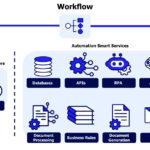
While structured workflows can exist without automation, their full value is unlocked when combined with automation.
Once workflows are clearly defined, automation can:
-
Route tasks automatically
-
Enforce rules and validations
-
Trigger actions across systems
-
Track performance and outcomes
This is where business process automation solutions become powerful—turning structured workflows into scalable, efficient, and intelligent operations.
Conclusion
Structured workflows are the foundation of efficient, accurate, and controlled business operations. By clearly defining how work moves across teams and systems, organizations reduce delays, minimize errors, and gain real-time visibility into performance. When paired with the right technology, business process automation solutions transform structured workflows into scalable systems that support growth, improve accountability, and strengthen long-term operational resilience.
FAQs
1. What is a structured workflow?
A structured workflow is a clearly defined sequence of tasks, roles, and rules that guide how work is completed.
2. Do structured workflows reduce flexibility?
No. They standardize routine steps while allowing flexibility where human judgment is needed.
3. How do structured workflows improve accuracy?
By enforcing consistent rules, validations, and execution across processes.
4. Can structured workflows work with existing systems?
Yes. They are often designed to integrate with current tools and platforms.
5. Are structured workflows only for large enterprises?
No. Small and mid-sized businesses benefit significantly from clarity and consistency.
6. How long does it take to implement structured workflows?
Timelines vary, but many organizations see improvements within weeks through phased implementation.
7. What is the link between structured workflows and automation?
Automation works best on well-defined workflows, enabling faster execution and better control.