
For many drivers, looking at the side of a tyre feels like reading a secret code. There is a confusing mix of numbers and letters stamped into the rubber. Most people ignore these markings until they get a flat tyre or fail an inspection. However, knowing what these numbers mean is crucial for every vehicle owner.
The correct tyre specifications or measurements are essential for your safety on the road. They directly influence how your car accelerates, turns, and brakes in emergencies. Using the wrong size can lead to mechanical stress and dangerous handling. Additionally, the right tyres optimize your fuel efficiency and ride comfort.
This is particularly important in the UAE where driving conditions are demanding. High temperatures and highway speeds require tyres that fit perfectly. This guide aims to simplify the process for you. Understanding tyre measurements empowers you to make smart, safe, and cost-effective decisions for your vehicle.
Introduction to Tyre Measurements
Tyres are the only contact point between your vehicle and the road surface. This makes them the most critical safety component of your car. Manufacturers spend millions developing the specific tyre requirements for each model.
Deviating from these specifications can alter the physics of your vehicle. A tyre that is too small may not support the vehicle weight properly. A tyre that is too large might rub against the wheel arches or suspension.
These issues can cause rapid wear and potential blowouts. In a region like the UAE, where heat stresses every component, this is a serious risk. Ensuring your tyres match the manufacturer’s design is vital.
It also affects your speedometer accuracy and odometer readings. If the tyre diameter is wrong, your speed reading will be incorrect. This could lead to unintentional speeding fines on radar-controlled roads.
Furthermore, correct sizing ensures that safety systems like ABS function correctly. These computers rely on precise wheel rotation data. Understanding tyre measurements ensures you keep these systems online and effective.
Where to Find Tyre Measurements on Your Vehicle
You do not need to be a mechanic to find the correct tyre size. The most accessible place is on the sidewall of your current tyres. It is the large string of characters molded into the outer rubber.
However, you should not blindly trust what is currently on the wheels. If you bought a used car, the previous owner might have installed the wrong size. It is always safer to verify with the official vehicle data.
Open your driver’s side door and look for a sticker on the door jamb. This placard lists the recommended tyre sizes and pressure settings. It is the definitive guide for your specific vehicle model.
If the sticker is missing or unreadable, check the owner’s manual. The manual will list all approved sizes for your car’s trim level. This ensures you are buying exactly what the engineers intended.
Reading the Tyre Sidewall
When you look at the tyre, you will see a sequence like “205/55 R16 91V”. This is the standard format used globally for passenger car tyres. Each section of this code provides specific technical information.
The numbers tell you the physical dimensions of the rubber. The letters indicate construction type and performance limits. Learning to read this sequence helps you compare prices and brands accurately.
Breaking Down a Standard Tyre Size
Let us break down a common example to make this clear. We will use the sequence 205/55 R16 for this explanation. This is a very common size for sedans and compact cars.
Understanding each part of this code prevents confusion at the tyre shop. It allows you to double-check that the technician is installing the right product. Here is what each number represents.
Tyre Width Explained
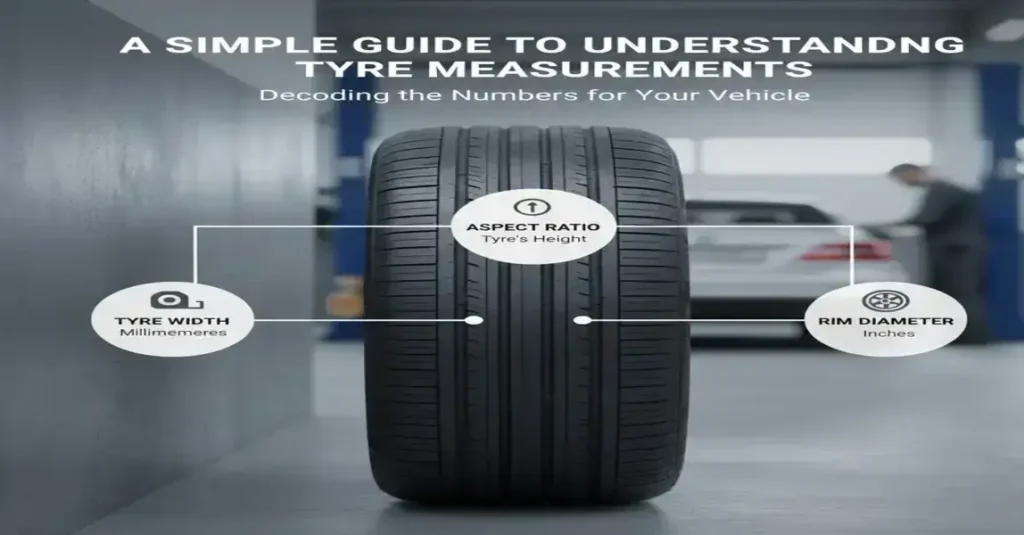
The first number in the sequence is 205. This represents the tyre width in millimetres. It is measured from the inner sidewall to the outer sidewall.
Width is a primary factor in how much grip your car has. A wider tyre has a larger contact patch with the road. This generally improves traction on dry surfaces and during cornering.
However, wider is not always better for every car. Wider tyres create more air resistance and rolling friction. This can lead to increased fuel consumption and road noise.
They are also more prone to hydroplaning on wet surfaces. The manufacturer selects a width that balances grip, efficiency, and safety. Sticking to this number is usually the best choice for daily driving.
Aspect Ratio and Ride Comfort
The second number, 55, is the aspect ratio. This is often the most confusing part for new drivers. It describes the height of the sidewall as a percentage of the width.
In this example, the sidewall height is 55 percent of 205 millimetres. A higher number indicates a taller sidewall profile. Taller sidewalls are generally found on SUVs and comfort-oriented sedans.
The sidewall acts as a secondary suspension system. It flexes to absorb bumps, potholes, and road imperfections. A higher aspect ratio usually results in a smoother, more comfortable ride.
Lower numbers, like 45 or 35, mean a shorter, stiffer sidewall. These are common on sports cars for better steering response. However, they transmit more vibration and impact to the passengers.
Rim Diameter and Wheel Fit
The letter R stands for Radial construction, which is standard for modern cars. The number following it, 16, is the rim diameter. This is measured in inches, unlike the width which is metric.
This number tells you the size of the metal wheel the tyre fits. You must match this number exactly to your wheel size. You cannot stretch a 15-inch tyre onto a 16-inch rim.
Attempting to mount mismatched sizes is extremely dangerous. It can cause the tyre bead to snap during inflation. It can also lead to the tyre coming off the rim while driving.
If you decide to change your rim size, you must adjust the tyre size. This ensures the overall diameter of the wheel remains the same. This is a complex calculation best left to professionals.
Understanding Load Index and Speed Rating
The final parts of the code are often overlooked but are vital for safety. In our example “91V”, the number 91 is the load index. The letter V is the speed rating.
The load index is a numerical code that corresponds to a maximum weight. It indicates how much load that single tyre can support when fully inflated. You must never install a tyre with a lower load index than recommended.
Doing so risks a blowout when the car is fully loaded with passengers. In the UAE, where families often travel with luggage, this is critical. Always check that the new tyre meets or exceeds the original spec.
The speed rating letter indicates the maximum speed the tyre can sustain. Common ratings include T (190 km/h), H (210 km/h), and V (240 km/h). This rating reflects the tyre’s ability to handle heat and centrifugal force.
Why These Ratings Matter in the UAE
The UAE environment is a torture test for tyres. High ambient temperatures mean tyres run hotter here than elsewhere. A higher speed rating generally means better heat dissipation capabilities.
Even if you never drive at 240 km/h, a V-rated tyre is stronger. It can handle the thermal stress of a Dubai summer highway drive better. It provides a safety buffer that lower-rated tyres might not offer.
Using a tyre with a low speed rating on a highway is risky. The internal structure can degrade rapidly under heat and speed. Always prioritize these safety ratings over cosmetic features.
Choosing the Right Tyre Size for Your Driving Needs
While the manufacturer sets the baseline, you have some choices within those limits. Your specific driving habits should influence your tyre selection. A car used for school runs has different needs than a highway cruiser.
Understanding how car tyre specifications relate to real-world driving helps. It allows you to tailor the vehicle to your lifestyle. It ensures you are not paying for performance you do not use.
Daily City Driving Versus Long Highway Drives
If you mostly drive in the city, prioritize comfort and durability. City driving UAE roads can involve speed bumps and construction zones. A tyre with a standard or higher aspect ratio is beneficial here.
It will protect your rims from curb damage and potholes. It also makes the ride more pleasant in stop-and-go traffic. High-performance low-profile tyres are often wasted in this environment.
For long highway commutes, stability and noise reduction are key. Tyres with optimized tread patterns can reduce the drone at 120 km/h. They also offer better directional stability, reducing driver fatigue.
Cost Considerations When Replacing Tyres
Tyre prices vary wildly based on size, brand, and performance rating. Larger rims generally require more expensive tyres. High-performance speed ratings also command a premium price.
Budgeting for replacement is easier when you understand the specs. You can shop around and compare apples to apples. This prevents you from being overcharged for standard sizes.
Drivers often compare options like 205/60r16 tyre price in uae when selecting tyres that balance comfort, safety, and affordability for daily driving. This specific size is a great example of a common, cost-effective option. It offers a good blend of performance without the high cost of luxury sizes.
Common Mistakes Drivers Make With Tyre Measurements
A common error is assuming that “bigger is better.” Some drivers install wider tyres thinking it looks cooler. Others install taller tyres to fill the wheel well gap.
Without adjusting other factors, this ruins the vehicle’s geometry. It can confuse the transmission shift points and speedometer. It puts extra strain on the wheel bearings and axles.
Another mistake is mixing tyre sizes on the same vehicle. Unless the car is designed for “staggered” fitment, all four should match. Mixing sizes causes instability and unpredictable handling.
Why Incorrect Tyre Size Can Be Risky
Fitting the wrong size can dangerously extend your braking distance. The contact patch shape changes, affecting how the ABS engages. In an emergency stop, every metre counts.
It can also cause the tyre to rub against brake lines or suspension arms. This friction can wear through critical components. Eventually, it leads to a sudden and catastrophic failure.
Incorrect sizes can also void your vehicle warranty. Manufacturers will not cover suspension damage caused by unapproved modifications. It may also give insurance companies a reason to reject a claim.
How Tyre Measurements Affect Safety and Performance
The engineering behind tyre sizing is precise. It balances weight distribution, aerodynamics, and friction. Sticking to the correct passenger car tyres ensures optimal performance.
Correct width ensures the car cuts through the air efficiently. Correct diameter ensures the gearing ratios are optimized for acceleration. It keeps the car feeling responsive and lively.
Impact on Fuel Efficiency and Handling
Fuel efficiency is directly linked to tyre size and width. Wider tyres have more rolling resistance, which burns more fuel. An incorrect diameter can also keep the engine out of its efficient RPM range.
Handling is compromised when sidewall heights are changed arbitrarily. A softer sidewall makes the steering feel vague and slow. A stiffer sidewall makes the car jittery and hard to control on bumps.
The manufacturer chooses a size that offers a neutral, safe handling balance. This ensures the car is easy to control for the average driver. Altering this balance can make the car difficult to drive in rain or emergencies.
When Should You Replace Tyres Based on Size and Wear
Tyre measurements also help you determine when to replace them. The tread depth is a measurable dimension of safety. New tyres typically have 8mm of tread depth.
In the UAE, you should consider replacement when it reaches 3mm. Most tyres have “wear bars” molded into the grooves. When the tread is level with these bars, the tyre is unsafe.
You should also measure the age of the tyre. Look for the DOT code on the sidewall, which shows the week and year of manufacture. In hot climates, replace tyres every 3 to 5 years regardless of tread.
Conclusion
In the conclusion of this blog, Understanding tyre measurements removes the mystery from car maintenance. It enables you to check the condition and suitability of your equipment. It ensures you are not taken advantage of when buying replacements.
Always refer to your door sticker or manual before making a purchase. Prioritize safety ratings like load and speed index, especially in the UAE. Correct sizing is the foundation of a safe, efficient, and comfortable drive.
By paying attention to these simple numbers, you protect your vehicle and your family. You ensure that your car performs at its best every day. Make tyre inspection a regular part of your car care routine.
Frequently Asked Questions
What do the numbers on a tyre mean?
They describe width, height ratio, and wheel size.
Can I change my tyre size?
Only within manufacturer approved limits.
Does tyre size affect fuel consumption?
Yes, incorrect sizing can increase fuel usage.
Are wider tyres always better?
No, wider tyres are not ideal for all vehicles.
Where can I check my correct tyre size?
On the tyre sidewall or vehicle door sticker.