
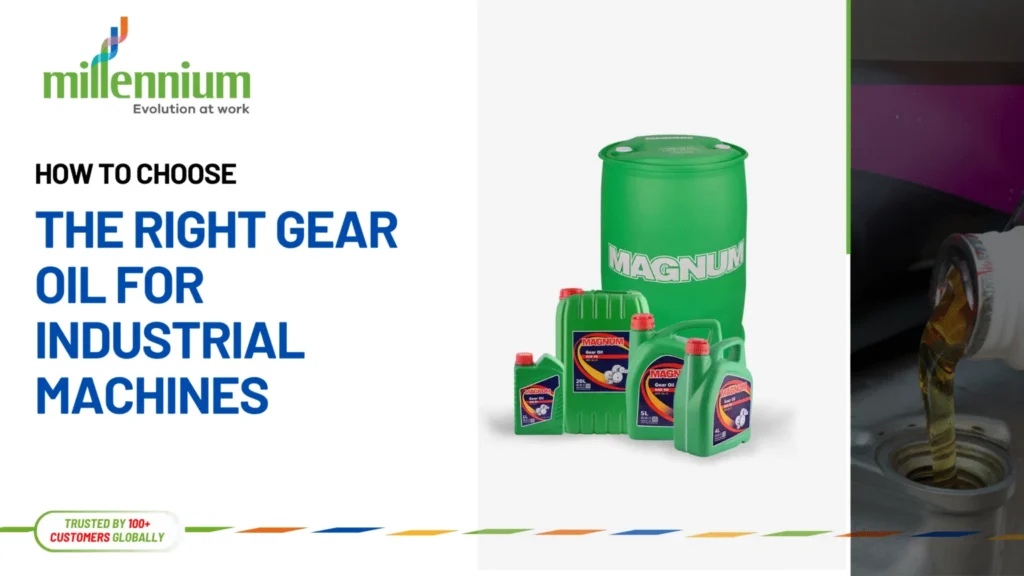

Industrial machines operate in demanding environments where reliability and consistency are non-negotiable. Gear systems are at the heart of this machinery, transferring power, controlling speed, and handling heavy loads day after day. While gears are designed with precision engineering, their real-world performance depends greatly on the gear oil used to lubricate and protect them. Choosing the right gear oil is a technical decision that influences machine lifespan, efficiency, and maintenance costs.
Why Gear Oil Deserves More Attention Than It Gets
Gear oil is often selected during installation and then forgotten until a problem occurs. This lack of attention can lead to avoidable failures. Unlike general lubricants, gear oils are specifically formulated to withstand intense pressure, continuous contact, and varying operating conditions.
One of the most important roles of gear oil is load distribution. When gear teeth mesh, pressure is concentrated at very small contact points. Proper gear oil spreads this load evenly, reducing localized stress and preventing surface damage. Over time, inadequate lubrication can cause pitting, micro-cracks, and abnormal noise, all of which signal impending failure.
Gear oil also contributes to operational stability. It cushions shock loads during start-up, shutdown, or sudden load changes. In industries such as mining, cement, and material handling, where shock loading is common, this cushioning effect is critical. Additionally, gear oil helps protect against corrosion and oxidation, especially in environments with moisture, dust, or chemical exposure.
By giving gear oil the attention it deserves, industries can reduce unplanned downtime, lower repair costs, and improve overall equipment effectiveness.
Types of Gear Oil
Different industrial applications require different gear oil formulations. Understanding these types helps ensure the oil matches the machine’s operating demands.
1. Conventional Mineral Gear Oils
Mineral gear oils are widely used in standard industrial gearboxes. They provide dependable lubrication under normal operating temperatures and loads. These oils are suitable for applications with predictable conditions and regular maintenance schedules.
2. Synthetic Gear Oils
Synthetic gear oils are engineered for performance. They offer superior viscosity stability, better resistance to oxidation, and longer service life. These oils are ideal for machines operating continuously, under high loads, or in extreme temperatures where mineral oils may degrade faster.
3. High-Performance EP Gear Oils
Extreme Pressure (EP) gear oils are formulated with additives that activate under severe stress. These additives form a protective layer on metal surfaces, reducing wear during heavy loading or shock conditions. EP oils are commonly used in heavy-duty gearboxes and industrial drives.
4. Worm Gear Oils
Worm gear systems involve a high degree of sliding contact. Specially formulated oils with enhanced lubricity and friction-reducing properties are used to improve efficiency and reduce heat generation in these systems.
5. Industry-Specific Gear Oils
Certain industries require gear oils with additional properties, such as resistance to water washout, enhanced corrosion protection, or compliance with safety standards. Selecting application-specific gear oils ensures both performance and regulatory compliance.
How to Choose Gear Oil According to Load and Speed
Selecting the correct gear oil requires a clear understanding of how the machine operates. Load and speed are the most influential factors in this decision.
Load Requirements
-
High-load and shock-load applications need gear oils with strong load-carrying capability and advanced additive systems. These oils protect gear teeth from deformation and surface fatigue.
-
Moderate-load applications can operate efficiently with standard formulations, provided the oil maintains a stable lubricating film.
Ignoring load conditions can lead to accelerated wear and early equipment failure.
Speed Considerations
-
Low-speed, high-torque systems require higher viscosity oils to maintain separation between gear surfaces.
-
High-speed gear systems perform better with lower viscosity oils that reduce internal friction and control heat buildup.
Balancing viscosity with operating speed is essential for efficient power transmission.
Operating Temperature
Temperature affects oil thickness and performance. Gear oils must maintain their properties across the machine’s operating temperature range. Oils with good thermal stability prevent sludge formation and viscosity breakdown in high-temperature environments.
Gearbox Design and Duty Cycle
The type of gears used and whether the machine operates intermittently or continuously also influence oil selection. Continuous-duty systems often benefit from premium gear oils that reduce maintenance frequency and extend service intervals.
OEM Recommendations
Always follow equipment manufacturer guidelines. These recommendations consider gear materials, clearances, and seal compatibility, ensuring safe and reliable operation.
MAGNUM Gear Oils: Perfect Fit for Industrial Machines
MAGNUM Gear Oils are formulated to meet the diverse challenges faced by modern industrial machinery. Designed with high-quality base oils and advanced additive technology, MAGNUM gear oils provide reliable protection across a wide range of applications.
Key benefits of MAGNUM Gear Oils include:
-
Strong protection against wear, scuffing, and surface fatigue
-
Excellent thermal and oxidation stability for long oil life
-
Consistent performance across varying loads and speeds
-
Reduced maintenance requirements and improved machine reliability
From standard industrial gearboxes to demanding environments, MAGNUM Gear Oils deliver dependable gear oil for heavy machinery, supporting efficient and trouble-free operation.
Conclusion
Choosing the right gear oil is a proactive step toward protecting industrial machines and maximizing productivity. By understanding the importance of gear oil, recognizing the different types available, and selecting the correct formulation based on load, speed, and operating conditions, industries can significantly improve equipment performance and longevity.
With high-performance solutions like MAGNUM Gear Oils, businesses can ensure their gear systems remain protected, efficient, and ready to perform in even the most challenging industrial conditions.


