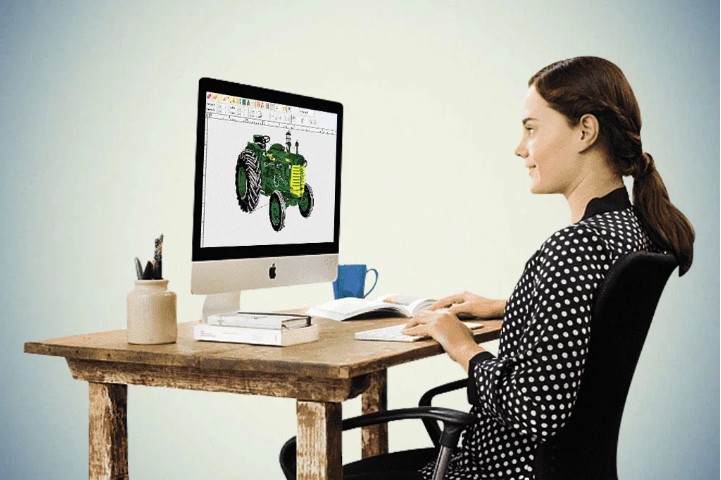

If you use a BAI embroidery machine, you already know how important it is to have your artwork converted into the correct stitch format. That’s exactly where Image to PXF File Conversion comes in. Whether your design is a JPG, PNG, SVG, AI, or any other image format, it must be properly digitized to turn it into a clean, crisp, and machine-ready PXF embroidery file. And no this is not something a simple “image converter” can do. It takes professional digitizing skills to map out stitches, density, underlay, and pathing for perfect results.
In this guide, you’ll learn how images are professionally converted into PXF files, why the process matters, and how you can get the cleanest, most accurate results for your BAI embroidery machine.
What Is a PXF File and Why Do You Need It?
A PXF file is the native embroidery file format used by BAI embroidery machines. Unlike normal image files, a PXF contains:
- Precise stitch coordinates
- Needle penetrations
- Underlay patterns
- Thread color sequence
- Stitch density settings
- Trims, jumps, and stops
- Pathing instructions
This means that a PXF doesn’t just show how the design looks it tells the machine exactly how to stitch it. That’s why converting your artwork to PXF requires more than drag-and-drop software.
Why You Can’t Convert Images to PXF with Simple Software
Many beginners search for quick converters online like “JPG to PXF converter” or “PNG to PXF online.” Unfortunately, these tools don’t actually create stitch files they just turn the artwork into a different picture format.
Here’s what they can’t do:
- They cannot assign stitch types
- They cannot set density levels
- They cannot adjust pull compensation
- They cannot add underlay
- They cannot control stitch direction
- They cannot optimize thread changes
Only professional embroidery digitizing can accomplish these tasks. So if you want your BAI machine to run smoothly and produce crisp, high-quality results, a manual digitizing process is essential.
Which Image Formats Can Be Converted to PXF?
Great news almost every artwork or image file can be converted into a PXF format as long as it’s clear enough to digitize:
- JPG / JPEG
- PNG
- SVG
- AI (Adobe Illustrator)
- EPS
- PSD
- TIFF
Vector formats like SVG, AI, and EPS provide the cleanest results, but high-quality PNG and JPG files also work well.
How Professionals Convert JPG/PNG/SVG Images to PXF Files
Below is the exact step-by-step process used by expert digitizers to turn ordinary images into ready-to-stitch PXF files.
Step 1: Importing and Preparing the Artwork
The digitizing process starts by importing your artwork into professional software such as:
- Wilcom
- Hatch
- Pulse Tajima
- Embrilliance
- Ink/Stitch
Once the design is imported, the digitizer checks:
- Image resolution
- Outline clarity
- Colors
- Shapes and curves
- Size requirements
- Fabric type you’ll embroider on
Any pixelated or unclear portions are cleaned up before moving forward.
Step 2: Adjusting the Artwork for Embroidery
Not all visual details translate well into stitches. That’s why the digitizer simplifies and adjusts the design by:
- Thickening thin lines
- Removing unnecessary fine details
- Smoothing curves and edges
- Simplifying gradients
- Reconstructing shapes when needed
This step ensures your PXF file will stitch accurately on fabric.
Step 3: Planning Stitch Types
Stitch selection is a major part of digitizing. Different elements in the design require different stitch types:
Satin Stitch
Best for outlines, text, borders, and small shapes.
Tatami (Fill) Stitch
Used for large filled areas like backgrounds or big shapes.
Run Stitch
Used for details, tracing shapes, and light elements.
Choosing the right stitch type prevents thread breaks, minimizes puckering, and ensures smooth embroidery.
Step 4: Setting Underlay Stitches
Underlay is the foundation of embroidery. It helps hold the fabric in place and supports top stitches.
Digitizers select the right underlay pattern:
- Edge-run underlay for satin
- Zig-zag underlay for borders
- Tatami underlay for large fill areas
This stops your design from shifting or becoming distorted while stitching.
Step 5: Adjusting Stitch Density
Stitch density determines how tightly packed stitches are.
- High density may cause thread breaks
- Low density may leave gaps
The right density depends on:
- Fabric type
- Thread type
- Stitch type
- Design size
This step ensures clean embroidery without puckering.
Step 6: Setting Thread Colors
Digitizers select colors from a recognized chart such as:
- Madeira
- Isacord
- Brother
- Robison-Anton
The final PXF file includes color sequences that your BAI machine can follow.
Step 7: Mapping the Stitch Path
Stitch path planning determines:
- Where the design starts
- Which parts get stitched first
- The order of colors
- Needle travel direction
- Where jumps and trims occur
Efficient pathing means fewer thread changes, shorter stitch times, and smoother results.
Step 8: Exporting to PXF Format
When all digitizing elements are complete, the file is exported as a PXF file ready for BAI embroidery machines. Before final delivery, the digitizer:
- Checks stitch count
- Verifies alignment
- Ensures no unnecessary trims
- Confirms proper density
- Tests scaling accuracy
This is what separates professional PXF files from cheap auto-digitized ones.
Why Professional Image to PXF Conversion Matters
High-quality PXF files result in:
- Smooth stitching
- Clean borders
- Proper underlay
- Minimal thread breaks
- Accurate colors
- Optimized needle movement
- No distortion on fabric
- Perfect results for commercial orders
Bad PXF files can cost you time, thread, and customer satisfaction.
Common Mistakes When Using Auto-Digitizers
Many people try using automated tools to convert their images to embroidery—with disappointing results.
Common issues include:
- Distorted shapes
- Threads pulling too tight
- Too many trims and jumps
- Unbalanced density
- Stitch paths that waste time
- Broken stitches
These mistakes are avoided when you use a professional digitizing service.
Tips to Get the Best Quality PXF Files
To ensure the highest quality results, follow these tips when sending artwork:
Use high-resolution images
Clearer artwork means cleaner stitches.
Provide exact size requirements
Embroidery cannot be resized freely after digitizing.
Mention the fabric type
Hats, t-shirts, and jackets all require different settings.
Share any preferred thread brand
This helps maintain accurate colors.
Avoid overly complex designs
Smooth shapes and bold lines stitch the best.
Industries That Use PXF File Digitizing
PXF files are widely used for:
- Corporate uniforms
- Sports team jerseys
- Fashion embroidery
- Custom patches
- BAI commercial embroidery shops
- School apparel
- Promotional products
If you own a BAI machine, you’ll need PXF files regularly.
Conclusion
Converting JPG, PNG, SVG, or any image into a PXF file is a detailed process that goes far beyond clicking a button. Professional Image to PXF File Conversion ensures your BAI embroidery machine receives a clean, accurate, and perfectly optimized stitch file that produces sharp, smooth, high-quality results every time. And when it comes to reliable, affordable, and fast digitizing, many businesses trust experts like Digitizing Buddy for flawless PXF conversions.