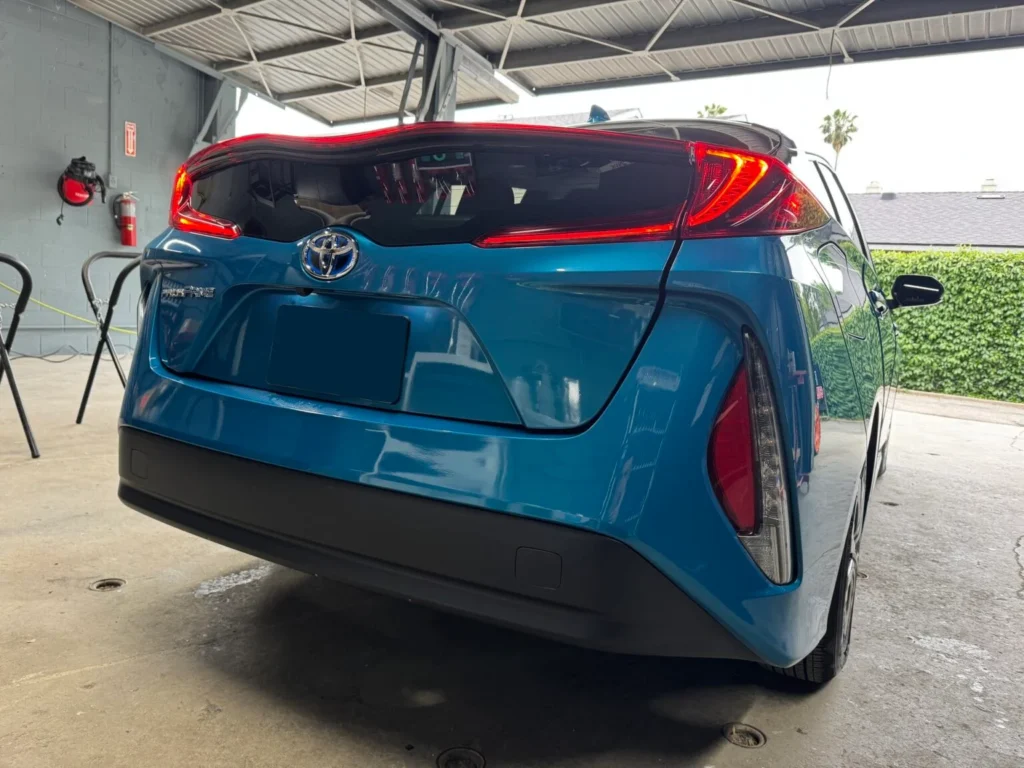

How PPF Actually Protects Your Paint
The film works by acting as a sacrificial layer. Road debris, small stones, sand, and even light scratches hit the film first. The energy from those impacts is dispersed, preventing paint chips and surface damage underneath.
Many modern PPF products also feature self-healing properties. Minor swirl marks or light scratches in the film can fade away with heat from sunlight or warm water. This doesn’t mean the film is indestructible, but it does mean everyday wear becomes far less noticeable.
A Common Misunderstanding I See
One mistake I often see is people waiting too long before installing PPF. They assume it can “fix” existing chips or scratches. In reality, paint protection film is preventative, not corrective. Applying it over damaged paint only seals in those imperfections.
The best time to install PPF is when the paint is new or freshly corrected. That’s when the film can do its job properly.
Where PPF Makes the Most Sense
Not every panel on every vehicle needs paint protection film. The smartest applications focus on exposure, not symmetry.
High-risk zones include:
-
Front-facing surfaces that take highway debris
-
Lower side areas exposed to gravel and road spray
-
Areas frequently touched by hands or cargo
For daily drivers, partial coverage can provide meaningful protection without going overboard. For long-term owners or enthusiasts, broader coverage often pays off in preserved paint quality.
PPF vs Ceramic Coatings
This comparison comes up often, and it’s important to understand the difference.
Ceramic coatings enhance gloss and make cleaning easier. They offer some resistance to chemical staining but do very little against physical impacts.
PPF, on the other hand, is designed to absorb physical damage. It won’t replace proper washing habits, but it does protect against chips and abrasions in ways coatings simply can’t.
In many cases, the two are used together—PPF for impact protection, ceramic coating for ease of maintenance.
Insider Tips from Real-World Experience
Here are a couple of insights that don’t always get mentioned in surface-level explanations:
-
Edge work matters more than the film itself. A perfectly good film can fail early if edges aren’t wrapped or secured properly. Lifted edges attract dirt and moisture.
-
Not all clear films are equal. Some lower-quality films yellow over time or become brittle. Longevity depends heavily on material quality and installation technique.
Another practical tip: always inspect the vehicle in natural light after installation. Shop lighting can hide small imperfections that become visible outdoors.
Does PPF Change How the Paint Looks?
When installed correctly, PPF should be nearly invisible. Most people won’t notice it unless they’re actively looking for edges. High-quality films are designed to maintain the original gloss and color depth of the paint.
There are also matte and satin PPF options available, but those are intentional styling choices rather than protection-only solutions.
If you ever notice excessive texture or cloudiness, that’s usually an installation issue, not an inherent flaw of the film.
How Long Does Paint Protection Film Last?
PPF is not permanent, but it is long-lasting. With proper care, many films hold up well for years without significant degradation. Environmental exposure, driving habits, and maintenance all play a role.
Regular washing and avoiding harsh chemicals help extend the life of the film. When it’s eventually removed, a quality installation should leave the paint underneath in excellent condition.
PPF and Vehicle Repairs
One often-overlooked benefit of paint protection film is how it supports long-term repair outcomes. Panels protected with PPF tend to require less paint correction over time, which can simplify future repair or refinishing work.
This perspective is shared by professionals involved in Auto body repair pasadena services, where preserving original paint as long as possible helps maintain factory finishes and reduces the need for more invasive repairs later on.
In other words, PPF doesn’t just protect paint—it supports smarter repair decisions down the road.
When PPF Might Not Be Necessary
Paint protection film isn’t mandatory for every vehicle or owner. If a car sees minimal highway use, is garage-kept, or will be replaced within a short timeframe, the value proposition changes.
It’s also not a substitute for careful driving or proper washing. Automatic car washes with aggressive brushes can still damage both the film and the paint beneath.
Maintenance After Installation
Once PPF is installed, maintenance is straightforward:
-
Wash regularly using gentle methods
-
Avoid abrasive polishes on the film
-
Address lifted edges early if they appear
Contrary to popular belief, PPF doesn’t require constant attention. It simply rewards reasonable care.
Final Thoughts
Paint Protection Film isn’t about perfection or showing off. It’s about reducing the small, unavoidable damage that accumulates over time. Chips happen. Scratches happen. PPF just makes them happen less often and with less consequence.
Also read for more information so click here.